news
What is difference between psychosis and schizophrenia?
Written by Matthew Shields — 0 Views
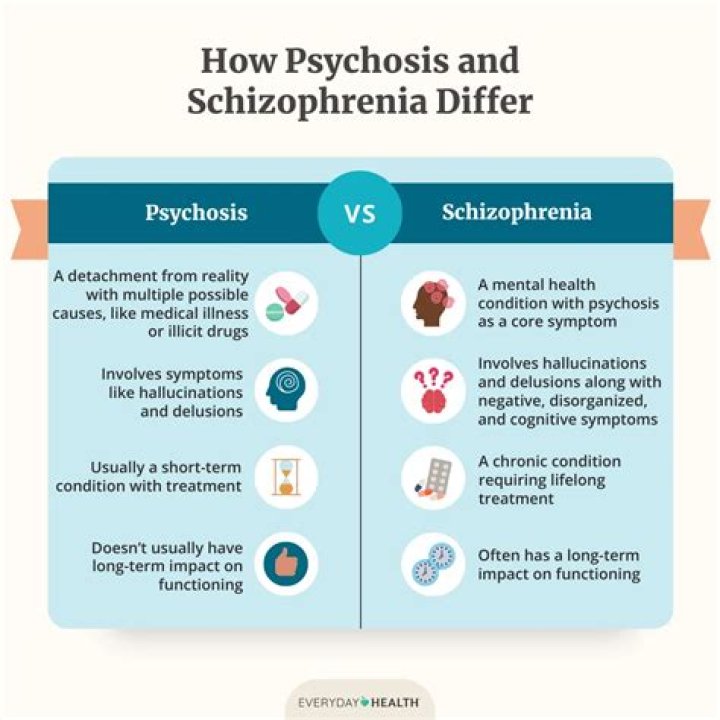
Psychosis is a condition in which someone has lost touch with reality. Its two main symptoms are hallucinations and delusions. Psychosis can have several causes, such as mental health disorders, medical conditions, or substance use. Schizophrenia is a mental health disorder that includes periods of psychosis.
When does psychosis turn into schizophrenia?
Schizophrenia: A person has some psychotic symptoms for at least six months, with a significant decline in the ability to function. Schizophreniform disorder: A person has some psychotic symptoms for more than one month and less than six months.Is schizophrenia and psychosis the same thing?
Schizophrenia is a mental illness that causes psychosis, but schizophrenia also has other symptoms. And it isn't the only cause of psychosis. In some cases, other mental illnesses cause psychosis, including depression, bipolar disorder, dementia and borderline personality disorder.Are schizophrenics always psychotic?
Psychosis is a symptom defined as losing touch with reality, while schizophrenia is a disorder that can cause psychosis. Individuals who have schizophrenia experience symptoms of psychosis, along with other symptoms. However, not all individuals experiencing psychosis have schizophrenia.What's the difference between psychosis and schizoaffective disorder?
Another difference is the psychotic symptoms that people experience. With schizophrenia, the psychotic symptoms are dominant. With schizoaffective disorder, episodes of psychosis may occur. However, it takes trained professionals to spot the differences between the two.Schizophrenia or Psychosis
What are the 4 types of schizophrenia?
DSM-IV classification types
- Paranoid type. Paranoid schizophrenia was characterized by being preoccupied with one or more delusions or having frequent auditory hallucinations. ...
- Disorganized type. ...
- Catatonic type. ...
- Undifferentiated type. ...
- Residual type.
What is schizophrenia mistaken for?
Conditions that cause the brain's receptors to stop functioning properly are often mistaken for schizophrenia or bipolar disorder because these diseases are associated with a decrease in activity of the NMDA receptors, which control how someone thinks, makes decisions, and perceives the world around them.What is the first stage of psychosis?
Almost always, a psychotic episode is preceded by gradual non-specific changes in the person's thoughts, perceptions, behaviours, and functioning. The first phase is referred to as the prodrome (or prodromal) phase.What are 3 symptoms of schizophrenia?
Schizophrenia is a chronic brain disorder that affects less than one percent of the U.S. population. When schizophrenia is active, symptoms can include delusions, hallucinations, disorganized speech, trouble with thinking and lack of motivation.What triggers psychosis?
Psychosis is a symptom, not an illness. It can be triggered by a mental illness, a physical injury or illness, substance abuse, or extreme stress or trauma. Psychotic disorders, like schizophrenia, involve psychosis that usually affects you for the first time in the late teen years or early adulthood.What are examples of psychosis?
Paranoid delusion and delusions of grandeur are two examples of psychotic delusions. A person with psychosis will often believe an individual or organisation is making plans to hurt or kill them. This can lead to unusual behaviour.Does psychosis lead to schizophrenia?
Schizophrenia involves a psychosis, a type of mental illness in which a person can't tell what's real from what's imagined. At times, people with psychotic disorders lose touch with reality. The world may seem like a jumble of confusing thoughts, images, and sounds. Their behavior may be very strange and even shocking.What are the four types of psychosis?
What types of psychosis are there?
- hallucinations.
- delusions.
- disorganised thinking and speech.
What are the early warning signs of psychosis?
Early warning signs before psychosis
- A worrisome drop in grades or job performance.
- Trouble thinking clearly or concentrating.
- Suspiciousness or uneasiness with others.
- A decline in self-care or personal hygiene.
- Spending a lot more time alone than usual.
- Strong, inappropriate emotions or having no feelings at all.
Can you go back to normal after psychosis?
The course of recovery from a first episode of psychosis varies from person to person. Sometimes symptoms go away quickly and people are able to resume a normal life right away. For others, it may take several weeks or months to recover, and they may need support over a longer period of time.What are the 5 types of schizophrenia?
Types of Schizophrenia
- Paranoid Schizophrenia. Prior to 2013, paranoid schizophrenia was the most commonly diagnosed type of schizophrenia. ...
- Catatonic Schizophrenia. ...
- Disorganized Schizophrenia. ...
- Residual Schizophrenia. ...
- Undifferentiated Schizophrenia.
What are 5 causes of schizophrenia?
It can also help you understand what — if anything — can be done to prevent this lifelong disorder.
- Genetics. One of the most significant risk factors for schizophrenia may be genes. ...
- Structural changes in the brain. ...
- Chemical changes in the brain. ...
- Pregnancy or birth complications. ...
- Childhood trauma. ...
- Previous drug use.
What are the top 10 signs of schizophrenia?
What are the top 10 signs of schizophrenia?
- Hallucinations. Hallucinations occur when you sense something that others cannot. ...
- Disorganized thinking. ...
- Delusions. ...
- Memory problems. ...
- Hyperactivity. ...
- Delusions of grandeur. ...
- Flat and expressionless appearance. ...
- Emotional withdrawal.