updates
Does mice eat spray foam?
Written by James Rogers — 0 Views
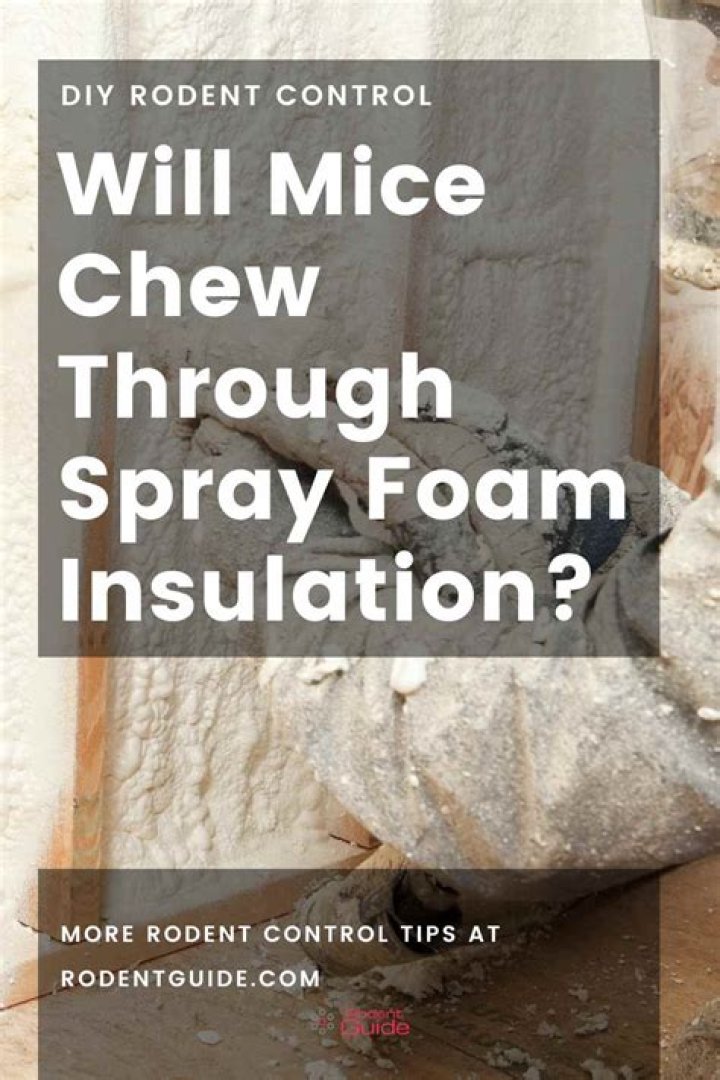
Filling the cracks and voids with the polyurethane foam acts as a rodent barrier, as mice and other rodents aren't able to chew through spray foam insulation. With polyurethane foam, the results are immediate.
Will expanding foam stop mice?
Spray foam insulation is completely rodent proof due to the air tight barrier it creates, but also because it does not act as a breeding ground or source of food. This makes spray foam insulation the number one choice for mice or rat proofing your home.Will rats eat spray foam?
Generally, rodents are not attracted to spray foam, as it doesn't resemble food. It's not something that they will chew on or eat, as opposed to other forms of insulation that is more easily penetrable. The thing is, spray foam is an insulation product.Do mice nest in spray foam insulation?
Filling the cracks and voids with the polyurethane foam acts as a rodent barrier, as mice and other rodents aren't able to chew through spray foam insulation. With polyurethane foam, the results are immediate. While it won't get rid of infestations already in your home, it will prevent them from happening.Do rodents eat expanding foam?
Some people combine this with expanding foam, to improve the cosmetic appearance and prevent drafts. However, expandable foam alone will not stop rats - they will chew through it.Does Spray Foam Keep out Mice, Rodents and Pests? | Foam University
How do you fill gaps to prevent mice?
Fill small holes with steel wool. Put caulk around the steel wool to keep it in place. Use lath screen or lath metal, cement, hardware cloth, or metal sheeting to fix large holes. These materials can be found at your local hardware store.What type of insulation keeps mice away?
Cellulose insulation is a deterrent for mice and other types of pests. Pests prefer solid materials where they can burrow and nest. The dry composition of the insulation makes it difficult for most pests and mice to survive.What will mice not chew through?
Fill Up Holes With Steel WoolUnlike insulation, paper, or even drywall, mice can't chew through steel wool, and even if they did, they'd be dead before they made it into your pantry. Stuff any holes where mice could be entering with steel wool and you'll keep them from sneaking in.
What do mice hate the most?
Mice have a very keen sense of smell that is much stronger than what humans experience. You can use this trait to repel mice and use scents that mice hate like cinnamon, vinegar, dryer sheets, clove oil, peppermint, tea bags, mint toothpaste, ammonia, cloves, clove oil, and cayenne pepper.Does bleach keep mice away?
Bleach is not an effective way to repel mice. Although it has a strong, unpleasant smell that turns most animals away, you would need to use large quantities of high concentration bleach to effectively repel mice.What scents do mice hate?
Peppermint oil, cayenne pepper, pepper and cloves.Mice are said to hate the smell of these. Lightly soak some cotton balls in oils from one or more of these foods and leave the cotton balls in places where you've had problems with mice.
How do I get rid of mice in my attic with blown insulation?
A several-pronged approach is needed to get them out of the house.
- Put on gloves, and get a broom and dust pan. ...
- Seal all holes in the attic with mess wire. ...
- Place mouse traps around the attic, near the blown-insulation. ...
- Remove the mice that are caught in the traps. ...
- Place mint plants in your attic.
Do I need to replace insulation after mice?
Rodents, in particular, pose a serious risk to the effectiveness of your attic insulation. If a rodent infestation occurs, it can become important to contact insulation companies to remove your current insulation that is in your attic floor and replace it with new insulation.How do you know if mice are gone?
Signs to Look for When Checking if the Mice are Gone
- No New Damage. Despite their small size, mice can cause big damage. ...
- No More Scratching Sound in the Walls. ...
- No More Stinking Smell. ...
- No Sign of Recent Activity.
Can a mouse get through a closed door?
A mouse has a flexible skeleton which allows it to squeeze tiny gaps that can be easily missed. Here are some top tips to help deter mice from your home: External doors: fitting bristle strips to the bottom of doors, especially in older properties where the door fit isn't so tight can help prevent mouse entry.Can mice chew through concrete?
That said, you might be curious to know, "Can mice chew through concrete?" The answer is yes, but only if the concrete is not cured properly. There is one material that mice tend to shy away from – steel wool.What is the fastest way to get rid of a mouse in the wall?
Here are a few humane, yet effective tips:
- Remove all food sources. Mice only need small amounts of food each day. ...
- Get rid of nesting materials. ...
- Seal entry points. ...
- Use natural mouse repellent. ...
- Get a cat. ...
- Try live traps. ...
- Use sound. ...
- Use essential oils.